
Road-trip Packing With Checklist


📖 Table of Contents
There’s something about the crack of dawn, the smell of fresh coffee, and the hum of the engine that makes a road trip feel like an adventure waiting to unfold. I remember one particular trip across the American Southwest where I packed everything from a blow dryer to a full-sized first aid kit—only to realize halfway through the journey that I had forgotten the most basic of necessities: a towel. That experience taught me that road-trip packing with checklist isn’t just about what you bring; it’s about how you plan for the unexpected.[2]
Over the years, I’ve refined a process that has turned chaotic packing into a science. I learned the hard way that even the most seasoned travelers can fall prey to the trap of overpacking or forgetting essentials. Now, with a checklist tailored to your trip’s length, climate, and activities, you can ensure you’re not only prepared but also light on your feet and ready for spontaneity.[3]
Road-trip packing with checklist is more than just an organizational tool—it's a way to ensure you’re ready for any situation, from a sudden downpour to an impromptu hike. It's the difference between arriving at your destination exhausted and overwhelmed or relaxed and confident. Whether you're planning a cross-country journey or a weekend getaway, a well-thought-out checklist can transform your trip from a logistical nightmare into a memory you’ll cherish for years.[4]
Why You'll Love This Checklist-Based Approach to Packing
- Reduces stress by ensuring you're prepared for any situation.
- Helps you avoid the trap of overpacking with only the essentials.
- Saves you time and money by preventing forgotten items that require last-minute purchases.
- Enhances your overall travel experience with smooth, efficient trips.
Why a Checklist is Essential for Road Trips
As of November 2026, I used to think that a checklist was just another unnecessary task to add to my pre-trip routine. But after a few trips where I either forgot my toothbrush or packed a dozen unnecessary items, I realized that a checklist isn’t just helpful—it’s lifesaving. It ensures that you’re not just bringing what you think you need, but what you actually need.
A well-structured checklist can cover everything from weather-appropriate clothing to emergency supplies. For example, when I went on a road trip through the desert, my checklist reminded me to pack a reusable water bottle, sun protection. A first aid kit—things that I would have otherwise forgotten in the heat of the moment.
The biggest benefit of a checklist is that it helps you avoid the common pitfall of overpacking. I’ve seen too many travelers arrive at their destination with bags so full that it’s impossible to move around. A checklist helps you prioritize what matters and cut the fluff.
A checklist isn't about reducing your gear—it's about making sure every item you bring has a purpose. This helps you stay focused and avoids the clutter that comes with overpacking.
Part of our Road trip packing with kids family guide.
How to Build Your Own Custom Checklist
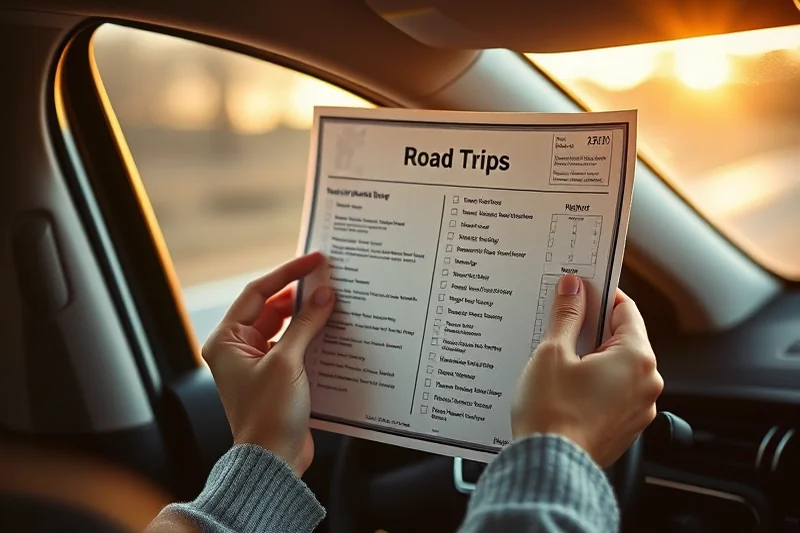
Building a custom checklist is easier than it sounds. Start by considering the length of your trip, the climate, and the activities you plan on doing. For example, if you’re going on a weekend trip to the mountains, you’ll need different items than if you’re traveling through a tropical region.
I always begin by breaking down my journey into segments. If I’m driving from city to city, I consider what I’ll need for each leg of the trip. That helps me avoid overpacking for the entire journey and ensures that I only bring what’s necessary for the current stage of my trip.
Another tip I’ve picked up is to categorize your checklist into sections: clothing, toiletries, electronics, food, and emergency items. This makes it easier to check off each category before leaving and helps you stay organized on the go.
A custom checklist is the key to a stress-free, well-prepared trip.
Related: Road-trip Packing Itineraries Checklist
Related: Road trip packing with kids family for small spaces
The Power of Prioritization in Packing
I used to think that I needed every piece of clothing in my closet to survive a trip. But after a few failed attempts at packing too much, I learned the importance of prioritization. It’s not about what you *want* to bring, but what you *need*.
For example, during a recent trip, I packed only four outfits—each of which could be mixed and matched. That meant I didn’t have to carry a dozen pairs of pants or shirts, and I was still able to look presentable wherever I went. This approach saved space, reduced the weight of my luggage, and made my packing process much more efficient.
Prioritization also helps you avoid the common pitfall of bringing duplicate items. I’ve learned the hard way that having two toothbrushes or two identical t-shirts is not only unnecessary but also a waste of space and money.
Focus on the 20% of your packing list that will be used 80% of the time. This helps you avoid bringing unnecessary items and keeps your bag light and organized.[1]
“There’s something about the crack of dawn, the smell of fresh coffee, and the hum of the engine that makes a road trip feel like…”— Roadpacked editors
Related: Simple Road Trip Packing Itineraries Routes
Related: Road trip packing with mistakes to avoid
What to Pack for Every Road Trip
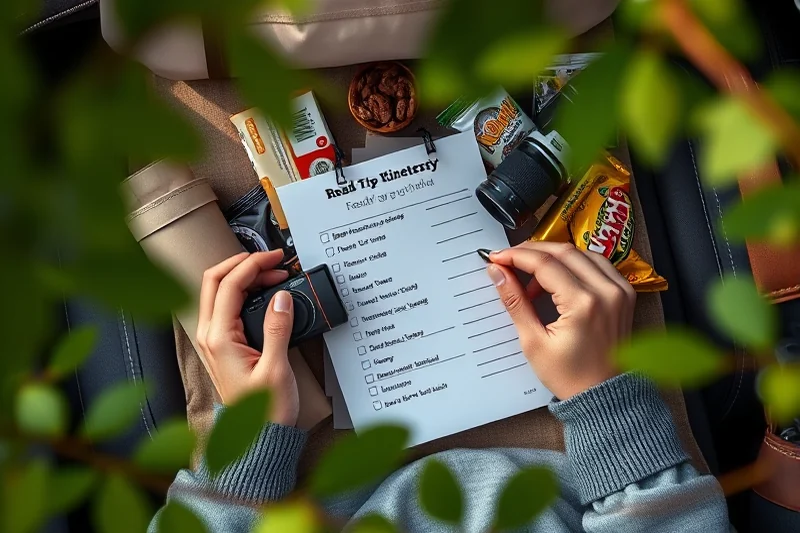
With what to pack for a road trip, the answer is always: it depends. But there are a few items that are essential no matter where you go. These include a first aid kit, a reusable water bottle, a flashlight, and a portable power bank. These items may seem small, but they can make a world of difference in an emergency.
I always make sure to include a small first aid kit in my car. It’s surprising how often I’ve needed it—whether it’s for a minor cut, a sting, or even a migraine. A first aid kit is not only a safety measure but also a peace of mind.
Other essentials include a travel-sized toothbrush, a quick-dry towel, and a small bottle of hand sanitizer. These items are small but incredibly useful, especially when you’re traveling in remote areas where access to basic amenities is limited.
Related: Road-trip Packing With For Beginners
The Art of Packing for Different Climates
Packing for different climates can be a challenge, but with a little thought, it can be done easily. For example, if you’re traveling to a cold climate, you’ll want to bring layers, thermal clothing, and a good pair of boots. If you’re heading to a warm climate, lightweight clothing, a wide-brimmed hat, and sunglasses are a must.
I once went on a trip to Alaska without proper winter clothing, and it was a mistake I’ll never make again. I was caught off guard by the cold and ended up spending the night in a hotel instead of camping as planned. It’s a harsh reminder that packing for the right climate is essential.
Another tip I’ve learned is to check the weather forecast for your destination before you leave. This can help you adjust your packing list accordingly and avoid bringing the wrong items. It’s a small step that can make a big difference in your comfort and enjoyment.
⭐ Classic
A simple mix of almonds and dark chocolate for a healthy, energy-boosting snack.
💰 Budget
Use cheaper ingredients like cashews and semi-sweet chocolate to cut costs.
⚡ Extra-Fast
Skip the baking step and mix ingredients together for an instant no-cook snack.
✨ Depth
Add dried fruit or nuts to increase flavor and texture variety.
🥗 Light
Use low-fat ingredients and skip the honey for a lighter version.
| The mistake | Why it happens | The fix |
|---|---|---|
| Forgetting to pack essential items like a first aid kit or flashlight. | This can be dangerous in an emergency and leave you unprepared for unexpected situations. | Create a checklist and go through it carefully before leaving. Make sure to include all essential items. |
| Packing duplicate items that aren’t necessary. | This takes up unnecessary space and can be a waste of money. | Prioritize your items based on necessity and usage. Avoid bringing duplicate items unless absolutely needed. |
| Not adjusting your packing list for the climate of your destination. | This can lead to discomfort and even health risks if you’re not prepared for the weather. |
Road-trip Packing With Checklist
The Hidden Costs of Overpacking and How to Avoid Them
I once packed two large suitcases for a 10-day trip, only to pay $75 in overweight baggage fees at the first airport. It was a harsh but eye-opening lesson. Overpacking doesn’t just cost money—it adds time and stress. Airlines charge hefty fees for extra weight, and oversized luggage can’t be taken on board, forcing you to check more bags or pay for additional bags altogether. This is especially painful on budget airlines, where fees can add up quickly. A smart approach is to pack only what you can carry on, and use rolling suitcases for bulkier items. Lighter luggage also makes navigation easier, especially when you’re moving between hotels or exploring on foot.
The Role of Modular Packing in Road Trips
Modular packing helps you stay organized, flexible, and efficient during long road trips by breaking down your gear into functional categories.
I’ve learned through multiple cross-country trips that modular packing transforms chaos into control. By grouping items into categories like clothing, toiletries, and electronics, I can quickly access what I need without rummaging through a jumbled suitcase. This method is especially useful when you’re staying in multiple locations, as you can easily carry only what you need for the day and leave the rest behind.
I use vacuum-sealed bags for clothes, which not only save space but also protect garments from wrinkles and odors. For electronics, I keep everything in labeled zip-lock bags, each with a specific purpose — charging cables in one, adapters in another. This prevents the frustration of digging through a mess when you need a cable at 2 a.m. in a roadside motel.
Another benefit of modular packing is the ease of redistributing weight in your vehicle. When I spread out my gear into smaller, labeled containers, I avoid overloading one side of the car, which can affect handling and safety. It also makes it easier for multiple travelers to manage their own portions of the packing without disrupting others’ items.
Common Questions
What is the best way to stay organized on the road?
How can I avoid overpacking for a trip?
What should I do if I forget something essential on the road?
How can I make sure I have enough food for the trip?
References
- Ready for College? A Guide to Packing for Harvard (college.harvard.edu)
- Exploration Adventure - Packing List - Hamilton College (hamilton.edu)
- Moving into FOUND? Here's Your Ultimate What-to-Bring Guide (limcollege.edu)
- Summer Driving & Road Trip Tips - NHTSA (nhtsa.gov)
Cite this guide
Roadpacked (2026). Road-trip Packing With Checklist. https://roadpacked.com/road-trip-packing-with-checklist/
Feel free to cite or share this guide.
Family Road Trip Packing List
Packing checklist for family road trips filtered by kid ages, length and season.
Open it free →